
My Driver Got Into an Accident—When Do I Need a DOT Post-Accident Test?
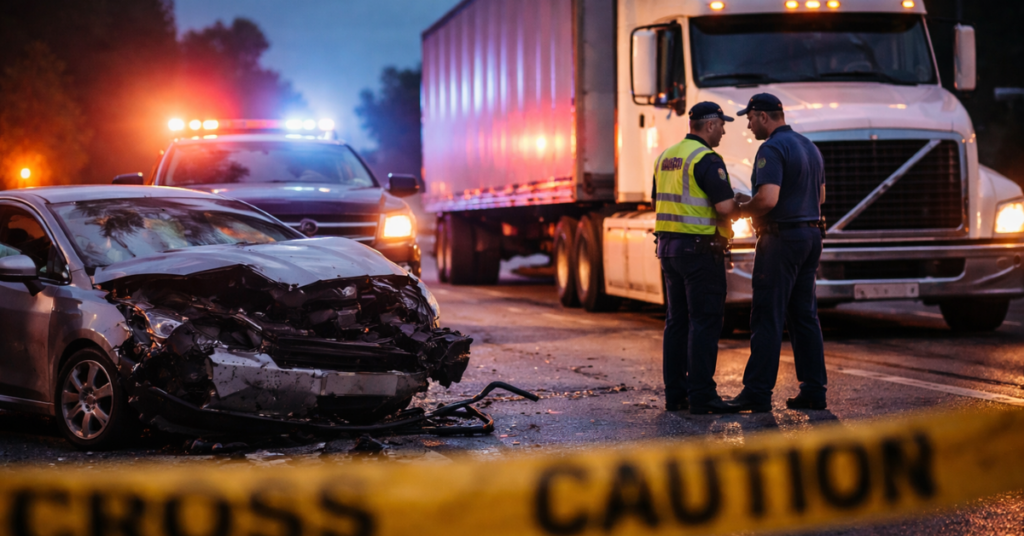
When you get the call that one of your drivers has been in an accident, the immediate questions flood in: Is everyone okay? What’s the damage? And for DOT compliance purposes: Do I need to drug and alcohol test?
Post-accident testing requirements are clear—but time-sensitive. Here’s exactly when you need to test.
The Two-Part Test
A DOT post-accident test is required when BOTH of these conditions are met:
1. The accident involves:
- A fatality, OR
- A vehicle is towed from the scene, OR
- Someone receives medical treatment away from the scene
AND
2. Your driver receives a citation for a moving violation arising from the accident
Both conditions must be present. If the accident involves serious damage or injuries but your driver isn’t cited, no DOT test is required. If your driver gets a ticket but it’s a minor fender-bender with no tow or injuries, no DOT test is required.
The Exception: Fatality Accidents
If there’s a fatality, you must test—citation or not.
This is the one exception to the two-part rule. Any accident that results in a human death requires immediate post-accident testing of the driver, regardless of who was at fault or whether a citation is issued.
Time Is Critical
Once you determine testing is required, the clock is ticking:
- Alcohol test: Must be conducted within 8 hours. If you can’t complete it within 2 hours, document why. If you can’t complete it within 8 hours, stop trying—but document your attempts.
- Drug test: Must be conducted within 32 hours. If you can’t complete it within 32 hours, stop trying—but document your attempts.
These deadlines are strict. Don’t wait to see if a citation will be issued. If you believe one is likely based on the circumstances, start the testing process immediately.
What Counts as a Citation?
The citation must be for a moving traffic violation related to the accident. Examples include:
- Following too closely
- Failure to yield
- Speeding
- Running a red light
- Reckless driving
What doesn’t count:
- Equipment violations (broken taillight, expired registration)
- Parking violations
- Warnings (must be an actual citation)
What If the Citation Comes Later?
Sometimes law enforcement doesn’t issue a citation at the scene. They might investigate and mail it days or weeks later. Here’s what to do:
If the citation arrives within the testing windows (8 hours for alcohol, 32 hours for drugs): Test immediately.
If the citation arrives after the testing windows have closed: You’re off the hook. Document that you received the citation after the deadline and no test was required.
However, if you have reason to believe a citation will be issued based on what the officer said at the scene, don’t wait. Test within the windows to be safe.
Driver Responsibilities
Your driver must:
- Remain available for testing
- Not use alcohol for 8 hours following the accident (or until they take the alcohol test, whichever comes first)
- Notify you immediately if they’re cited
If a driver refuses testing or leaves the scene and becomes unavailable, that’s considered a refusal to test—which has the same consequences as a positive result.
Common Scenarios
Minor fender-bender, no tow, no injuries, driver gets ticket: No test required.
Vehicle towed, other driver injured, your driver not cited: No test required.
Vehicle towed, your driver cited for speeding: Test required.
Someone killed, your driver not cited: Test required (fatality exception).
Passenger injured and treated at hospital, driver cited: Test required.
Document Everything
Whether or not you conduct a post-accident test, document the accident thoroughly:
- Date, time, and location
- Whether anyone was injured or killed
- Whether a vehicle was towed
- Whether the driver was cited (and for what)
- Why testing was or wasn’t conducted
- If testing was required but not completed, why not
Keep this documentation in your accident file. If DOT or FMCSA asks questions later, you’ll need to show you followed the rules.
The Bottom Line
Post-accident testing is required when there’s a fatality, OR when there’s a tow/injury AND your driver receives a moving violation citation.
Act fast—you have 8 hours for alcohol and 32 hours for drugs. Document your decision either way. And when in doubt, contact your TPA immediately for guidance. They should be able to walk you through the requirements and help you schedule testing if needed.
Time-sensitive compliance questions are exactly why you have a TPA. Use them.